
Eugene Symphony Orchestra and Chorus “Raise The Roof” with Handel’s Messiah
Posted on EugeneScene by Daniel Buckwalter | Dec 15, 2025 | Reviews
(#CommonManAtTheSymphony)
And the trumpet shall sound.
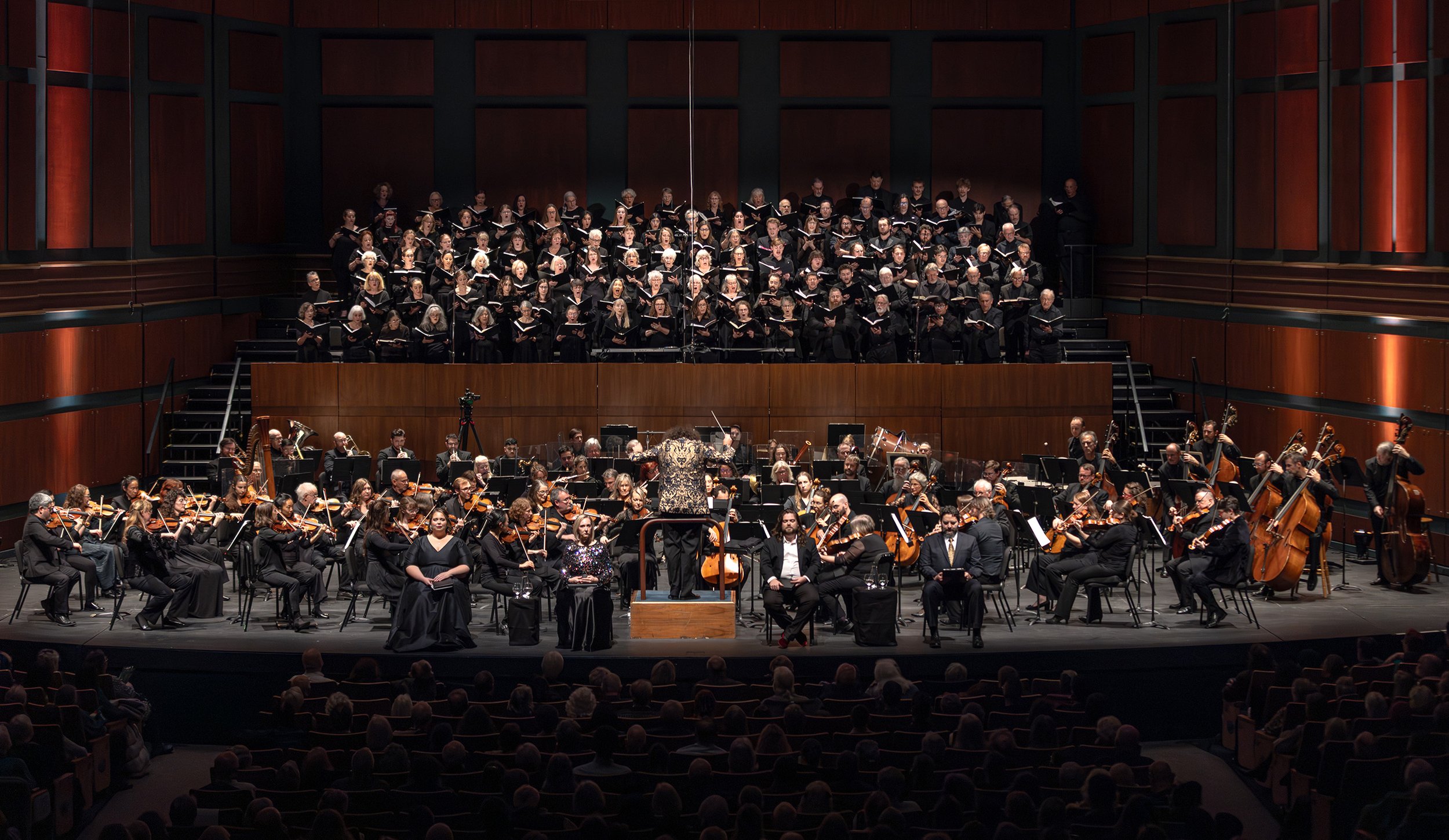
Eugene Symphony’s Handel’s Messiah concert.
Along with the rest of the brass section, and with a heavy dose of triumphant percussion instruments, and the sometimes serene and sometimes frenzied play of the wind and string instruments.
Oh, and don’t forget the four vocal soloists and the thundering sound of the more than 100-member chorus.
Grandeur shined everywhere, it seemed, on Dec. 11 at in the Hult Center’s Silva Concert Hall with the Eugene Symphony Orchestra and Eugene Symphony Chorus taking on George Frideric Handel’s Messiah in front of an adoring audience.
Wave after powerful wave enveloped the nearly full house. If you were fortunate to attend the concert and, like me, you weren’t entirely invested yet in the Advent spirit — well, you and I both were taken on a joyful ride.
Led on the podium by Alex Prior (and with Naomi Castro making her debut as the Eugene Symphony Chorus director), the symphony took on the 1958 orchestration of Eugene Goossens.
The orchestration is a slimmed-down version of Messiah (33 movements instead of 53), and while Prior took time to note that not a single note was changed in the orchestration, it was clear that Goossens steered his version of Messiah to places I had not heard it performed before.
The results were amazing.
Take, for instance, the overture. I had only known it as a sharp, bouncy piece with angles. This time, Prior led the orchestra through a silkier, more delicate overture — thoughtful, even — that set the tone for the story to come (and the wonderful imagery of Charles Jennens’ libretto).
“Comfort ye,” sung by tenor Wayd Odle, and “I know that my Redeemer liveth” sung by soprano Meghan Kasanders, were my two favorite solos, and baritone Aleksey Bogdanov and mezzo-soprano Lindsay Ammann were equally fine.
True, this performance of Messiah was an orchestration (“an ode of love,” as Prior put it), but thankfully, Goossens let the “Hallelujah” chorus stand on its own.
As the audience rose, I was reminded yet again that it is the women — always the women — who raise the roof with this particular piece. It is the women, through layers and layers of higher and higher notes, who bring the glory to this chorus, and, like everyone else, I applaud.
I am now ready for the season.